
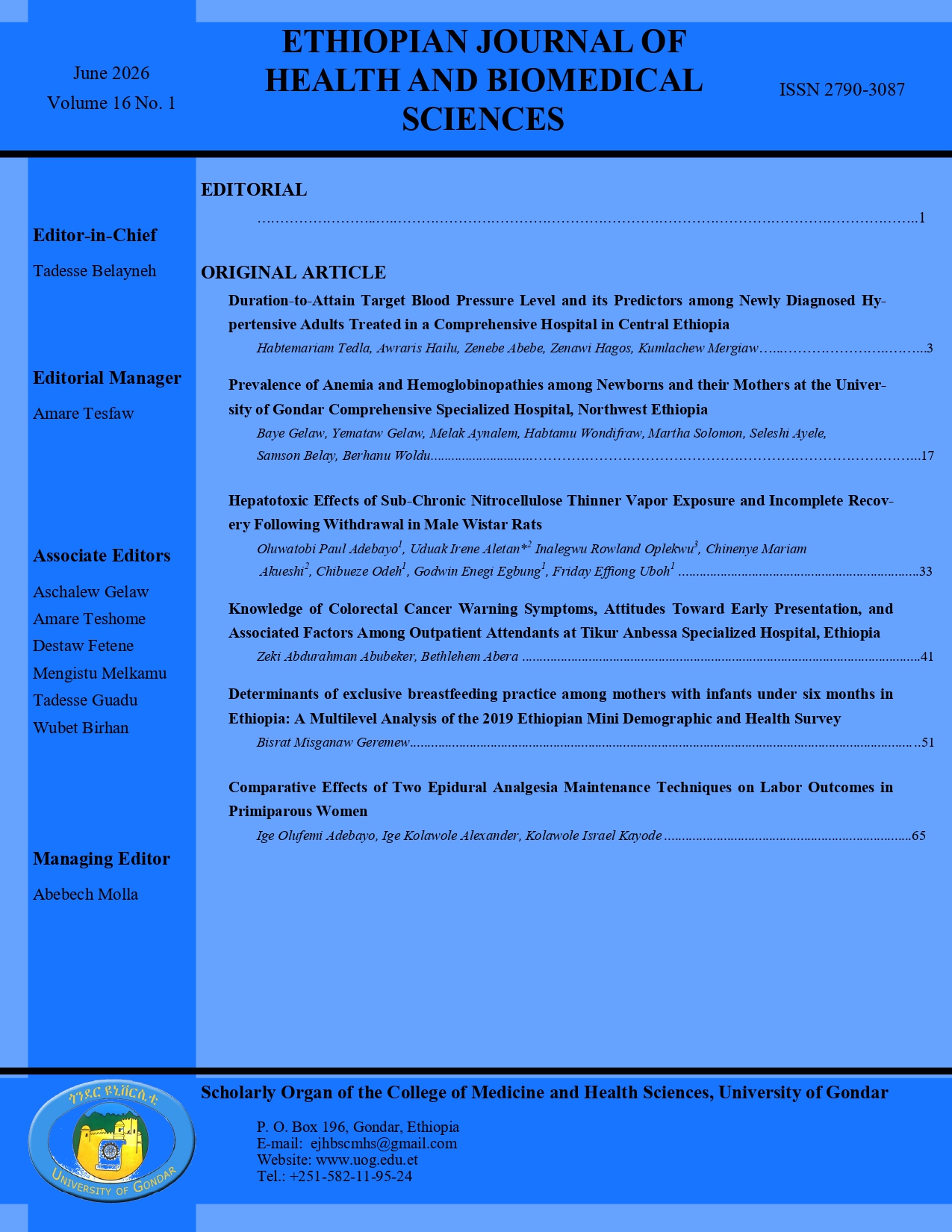
Comparative Effects of Two Epidural Analgesia Maintenance Techniques on Labor Outcomes in Primiparous Women
Background: Labor is characterized by regular, painful uterine contractions, and epidural analgesia is considered the most effective method for relieving labor pain. Motor block from epidural local anesthetic administration can affect labor outcomes. The technique of epidural local anesthetic administration can also affect the outcome of labor. This study aimed to compare the progress of labor and delivery outcomes in women whose labor pain was managed with patient-controlled epidural analgesia (PCEA) and clinician-administered intermittent bolus epidural analgesia.
Methods: This prospective randomized study recruited 80 primiparous parturients in the active phase of labor in two groups. They received either self-administration of 5 ml of 0.125% bupivacaine + 2 µg fentanyl/ml of bupivacaine through the PCEA pump with a lockout interval of 20 minutes or hourly clinician-administered 10 ml of the same study solution. The outcome measures were duration of labor, fetal heart rate, APGAR score, mode of delivery, and willingness to request epidural analgesia in subsequent deliveries. Data was analyzed after a normality test with the Shapiro-Wilk test. Continuous variables such as age and duration of stages of labor were analyzed using the Student t-test. Nominal data such as mode of delivery was analyzed using the chi-square test or Fisher’s exact test as appropriate. Statistical significance was set at a p-value of <0.05.
Results: The mode of delivery was comparable between groups. There was no significant difference in duration of the first (p = 0.422) and second (p = 0.947) stages of labor between the two groups. Fetal outcomes were not adversely affected, and the median APGAR scores at 5 minutes were comparable (p = 0.083) between the two groups. The willingness to request epidural analgesia during labor for the next delivery was similar in the two groups (p = 0.414).
Conclusion: Hourly intermittent epidural bolus administration of bupivacaine with fentanyl had no adverse effects on labor and fetal outcomes compared to PCEA. Thus, it is recommended for use in low-resource regions without electronic infusion pumps.
Keywords
Authors
How to Cite
Download Citation
License
Copyright © 2026 The Author(s)

This work is licensed under a Creative Commons Attribution-NonCommercial-NoDerivatives 4.0 International License.
Similar Articles
- Asressie M, Yigzaw K , Telake A, Survival and Predictors of the Survival of HIV-Infected Adult Patients Taking HAART at Hawassa University Referral Hospital , Ethiopian Journal of Health and Biomedical Sciences: Vol. 6 No. 1 (2014)
- Feleke Mekonnen, Tigist Engida, Yalemwork Gashaye, Yitayih Wondimeneh, Mulat Dagnaw, The Prevalence of Tuberculosis among HIV/AIDS Patients Attending the Art Clinic at Gondar Health Center, Northwest Ethiopia , Ethiopian Journal of Health and Biomedical Sciences: Vol. 9 No. 1 (2019)
- Mequanint Bezie, Moges Tiruneh, Belay Anagaw, Mulat Dagnew, Bacterial Causes of Acute Febrile Illnesses and Their Antimicrobial Susceptibility Patterns in Adult Patients Attending Felege-Hiwot Referral Hospital, Northwest Ethiopia: A Cross Sectional Study , Ethiopian Journal of Health and Biomedical Sciences: Vol. 8 No. 1 (2017)
- Afework Kassu, Masayuki Fujino, Masako Nishizawa, Getahun Mengistu, Ermias Diro, Belete Ayele, Dereje Ketema, Feleke Moges, Andargachew Mulu, Gizachew Yismaw, Kahsay Huruy, Ebba Abate, Assefa Getachew, Moges Tiruneh, Yared Wondmikun, Wataru Sugiura, Fusao Ota, Levels of serum HIV-1 RNA viral load in tuberculosis patients with or without intestinal parasites during treatment of tuberculosis in Gondar, Ethiopia , Ethiopian Journal of Health and Biomedical Sciences: Vol. 1 No. 1 (2008)
You may also start an advanced similarity search for this article.