
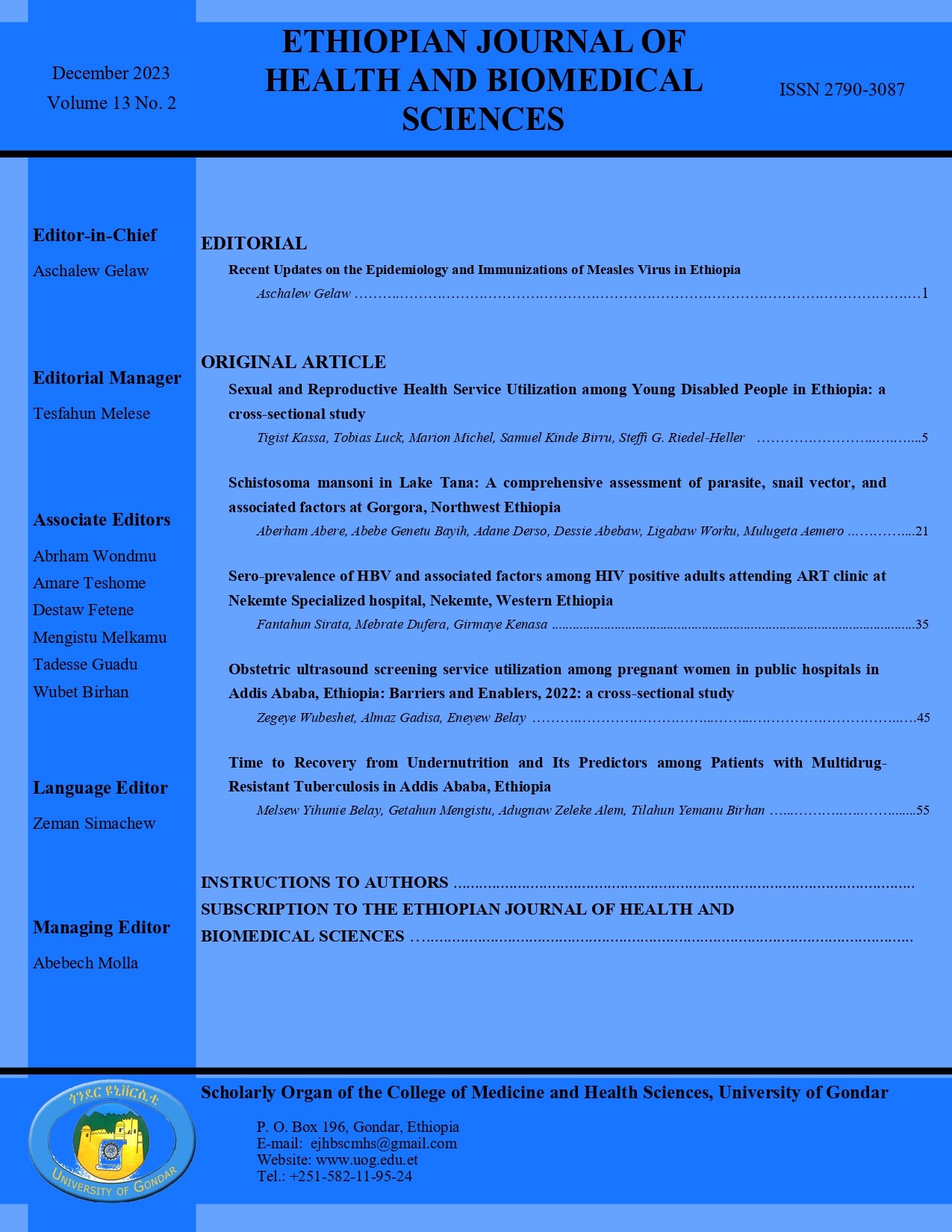
Sero-prevalence of HBV and associated factors among HIV positive adults attending ART clinic at Nekemte Specialized hospital, Nekemte, Western Ethiopia
Background: Hepatitis B is a major global health problem and potentially life-threatening liver infection caused by hepatitis B virus. It is more common in HIV infected individuals. The aim of this study was to assess the sero-prevalence of hepatitis B infection and associated factors among HIV positive adults on Antiretroviral Therapy (ART).
Method: A hospital based cross-sectional study was conducted from March to June, 2021.Samples were taken from randomly selected HIV positive adults visiting an ART clinic using a single population proportion formula. Blood sample were tested for HBsAg and data entered into Epi-data software 3.1, transferred to SPSS version 20 and analyzed. A difference was considered statistically significant at p value <0.05.
Result: Among 384 HIV positive adults on ART selected for this study, 199 (51.8%) were males and 185(48.2%) were females. Twenty-two (5.7%) individuals were sero-positive for HBsAg, of which 9 (2.3%) and 13 (3.4%) were females and males, respectively. Among the 384 adults, 22.7% of them had been married, and 9.1%, 40.9%, and 25% had been widowed, divorced and single, respectively and significantly associated with the presence of HBsAg at a 5% level of significance [AOR = 4.02; P = 0.041]. Similarly, regarding CD4 count, among the study subjects 0% of them had 200-250cells/µl and 251-300cells/µl, and 0.8%, 1.3%, and 3.6 % had <200cells/µl, 301-500cells/ µl and >500cells/ µl respectively and significantly associated with the presence of HBsAg at a 5% level of significance [AOR = 1.03; P = 0.034].
Conclusion: The prevalence of HBsAg was found to be moderate in HIV positive adults on ART. HBV infection had no significant effect on ART treatment progress or virological suppression. ART treatment had no association with HBV sero-negativity.CD4 counts had significant association with HBV infection. Provision of routine screening for HBV–HIV co-infected individuals and promoting awareness of this risk creation is necessary to advance treatment strategies.
Keywords
Authors
How to Cite
Download Citation
License
Copyright © 2023 The Author(s)

This work is licensed under a Creative Commons Attribution-NonCommercial 4.0 International License.
Similar Articles
- Habtamu Guadie, Berhanu Fikadie, Tesfahun Yilma, Binyam Tilahun, Digital Readiness for eConsultation towards the COVID-19 pandemic among Health Professionals: Northwest, Ethiopia , Ethiopian Journal of Health and Biomedical Sciences: Vol. 12 No. 2 (2022)
- Aschalew Gelaw, Review on the epidemiology of astrovirus infections in East Africa and its public health significance , Ethiopian Journal of Health and Biomedical Sciences: Vol. 15 No. 1 (2025)
- Mohammed Oumer, Alemayehu Teklu , Edengenet Guday, Demiss Mulatu Geberu, Abebe Muche, Comparison of the Mean Length and Width of Anterior Fontanel among Newborns in Gondar City , Ethiopian Journal of Health and Biomedical Sciences: Vol. 11 No. 1 (2021)
- Mizan Kindu, Emergence and spread of carbapenemase producing Gram negative bacteria in Ethiopia: a call for action , Ethiopian Journal of Health and Biomedical Sciences: Vol. 14 No. 2 (2024)
- Andinet Dessalegn, Bernard B Anderson, Cancer of the Anus: A Five Year Review of Cases at Gondar University Hospital and a Thirty-Five Year Experience of a Single Surgeon , Ethiopian Journal of Health and Biomedical Sciences: Vol. 5 No. 1 (2012)
- Gebeyaw Tiruneh, Yigzaw Kebede, Tegbar Yigzaw, Use of the Plant Artemisia Annua as a Natural Anti-Malarial Herb in Arbaminch Town , Ethiopian Journal of Health and Biomedical Sciences: Vol. 2 No. 2 (2010)
- Abebe Muche, Edengenet Guday, Mueez Abraha, Yared Asmare, Ayanaw Worku, The Existence of Accessory Renal Arteries in a Male Cadaver in Ethiopia: A Case Report , Ethiopian Journal of Health and Biomedical Sciences: Vol. 8 No. 1 (2017)
- Chernet Bahru, A Retrocaval Right Testicular Artery Supplying the Right Suprarenal Gland and The Wall Of The Inferior Vena Cava with an Unusual Origin from the Abdominal Aorta , Ethiopian Journal of Health and Biomedical Sciences: Vol. 1 No. 1 (2008)
You may also start an advanced similarity search for this article.
Most read articles by the same author(s)
- Mebrate Dufera, Hans C.Aass , Nega Berhe , Beyene Petros , Berhanu Erko, Cytokine Response in Mono and Malaria-S. mansoni Co-Infected Individuals in Fincha Sugar Estate, Western Ethiopia , Ethiopian Journal of Health and Biomedical Sciences: Vol. 9 No. 1 (2019)