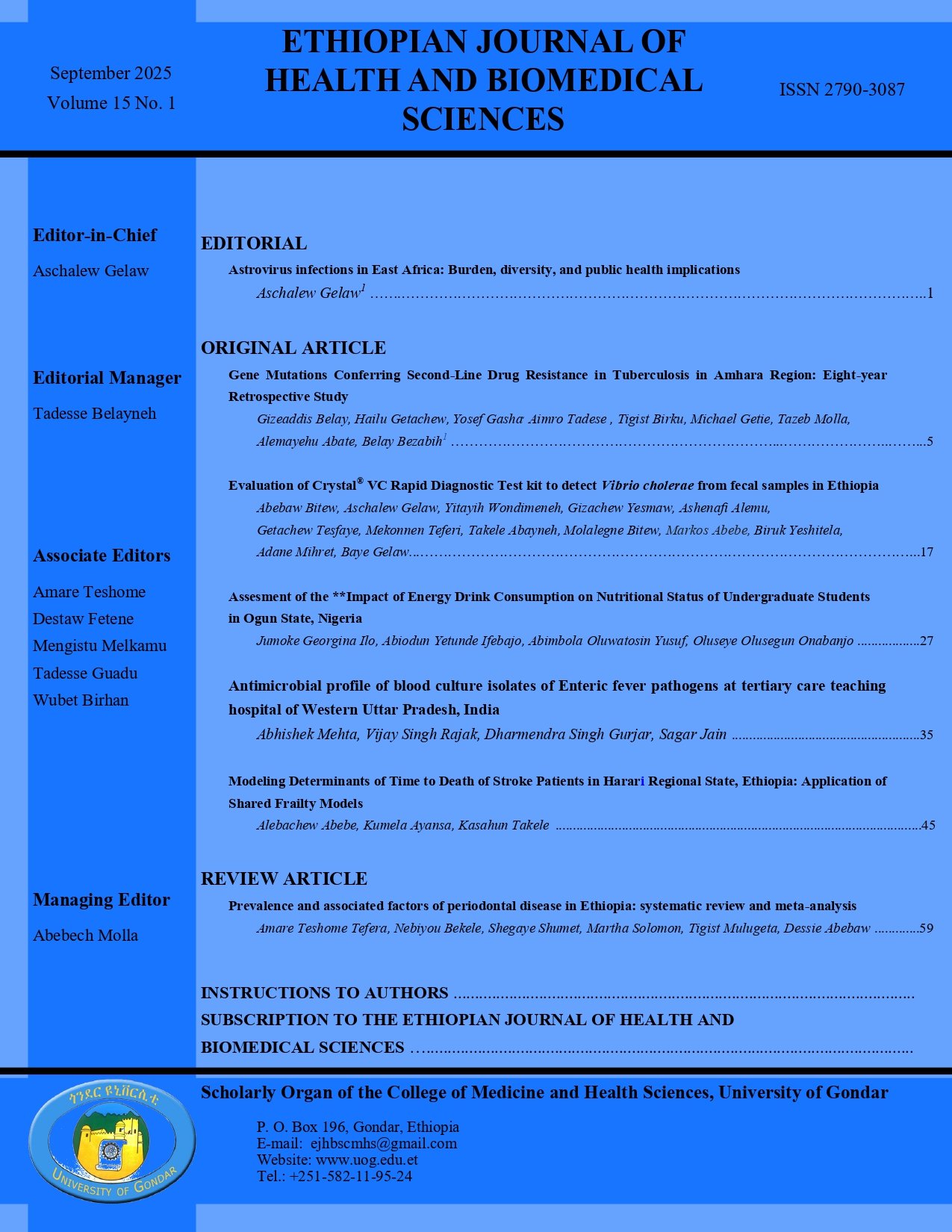
Prevalence and associated factors of periodontal disease in Ethiopia: systematic review and meta-analysis
Article Sidebar
Main Article Content
Abstract
Background: Periodontal disease, a chronic bacterial infection of the periodontium, is the major cause of tooth loss, masticatory dysfunction, and edentulism. These outcomes adversely affect nutritional status, self-esteem, and quality of life, while also contributing to significant healthcare costs and socio-economic burden. Although oral diseases affect approximately 3.5 billion people globally, with 75% residing in low- and middle -income countries, the national prevalence of periodontal disease in Ethiopia remains undetermined.
Objective: This review aimed to determine the pooled prevalence and associated factors of periodontal disease in Ethiopia.
Method: A systematic search was conducted across PubMed, Scopus, Embase, and Google Scholar to identify relevant studies on periodontal disease in Ethiopia, from inception to April 2023, with no language restrictions. Data were extracted using Microsoft Excel and analyzed in Stata version 17. The pooled prevalence and associated factors were estimated using a random-effects mode due to the high heterogeneity. Heterogeneity was assessed using the Higgs I2 statistic and the Cochrane Q test. Subgroup and sensitivity analyses were conducted to explore source of heterogeneity. The review adhered to the PRISMA guidelines, and the protocol was registered in PROSPERO (CRD42023415994).
Result: Thirteen studies comprising 10,744 participants were included. The pooled prevalence of periodontal disease in Ethiopia was 35% (95% CI: 25% – 45%) with substantial heterogeneity (I2=99.46%). The highest prevalence was reported in Addis Ababa (42%; 95% CI: 29% to 55%) and among institutionalized individuals (49%; 95% CI: 44 – 55%). Regular toothbrushing was associated with lower odds of periodontal disease (OR = 0.26; 95% CI: 0.24 – 0.28), while male gender (OR = 0.72, 95% CI: 0.64 – 0.80) and carbohydrate intake (OR = 0.54, 95% CI: 0.44 – 0.65) were significantly associated with a reduced risk of periodontal disease in Ethiopia.
Conclusion: Periodontal disease affects approximately one in three Ethiopians, with higher prevalence among institutionalized populations. Key determinants include inadequate oral hygiene, female gender, and dietary habits. These findings underscore the need for targeted oral health interventions, including the promotion of regular tooth brushing and dietary modification. National policies should support standardized diagnostic guidelines and integrate oral health services into broader community health programs.
Article Details
Issue
Section

This work is licensed under a Creative Commons Attribution-NonCommercial 4.0 International License.
© The Author(s). This article is published in the Ethiopian Journal of Health and Biomedical Sciences as an open-access article and is distributed under the terms of the Creative Commons Attribution 4.0 International License (CC BY 4.0), which permits unrestricted use, sharing, adaptation, distribution, and reproduction in any medium or format, provided the original author(s) and the source are properly cited.
How to Cite